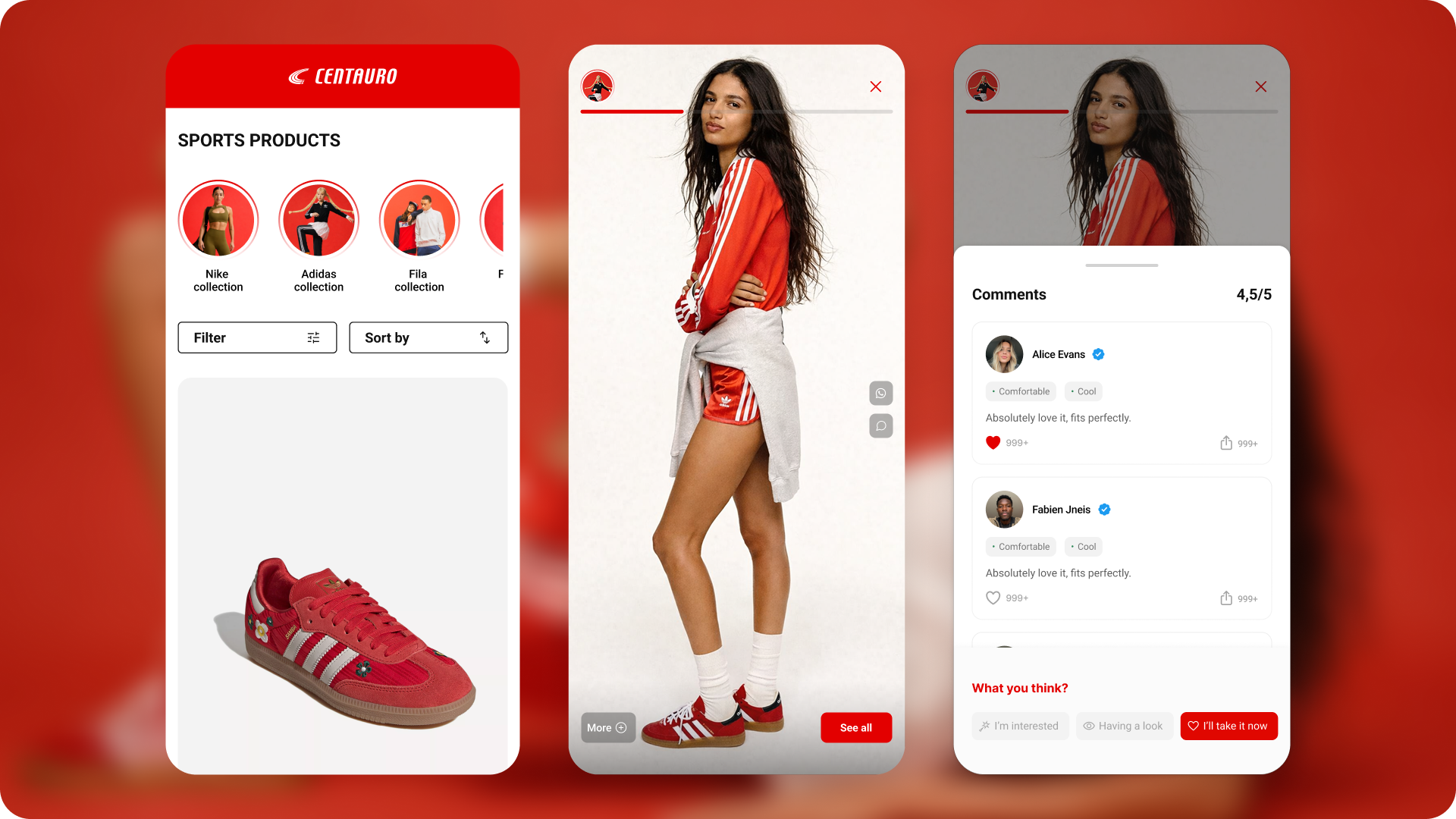
Turning product discovery into a social experience for Gen Z users
We designed a web stories experience for Centauro’s product listing pages, helping users consume product content faster and increasing engagement in high-drop-off journeys.
PRODUCT DESIGNER
CENTAURO
2025
E-COMMERCE/SPORTS
PRODUCT DESIGNER (2)
PRODUCT MANAGER (1)
ENGINEERS (2)
ROLE
COMPANY
YEAR
INDUSTRY
TEAM
OVERVIEW
Adapting product discovery to a generation that consumes less and expects more
Centauro is one of the largest sports retailers in Brazil, with a growing share of younger users shaping how people discover and interact with products.
However, this audience consumes less content, navigates faster and abandons journeys earlier, limiting product discovery and conversion.
To address this, we explored a web stories format within product listing pages, transforming static product grids into a more engaging, content-driven experience inspired by social platforms.
USABILITY SUCCESS RATE
82%
Users were able to complete key tasks successfully during usability testing, with fewer errors across the journey.
FIRST-CLICK ACCURACY
88%
Users selected the correct path on their first interaction, indicating clearer navigation and structure.
CONTENT EXPLORATION
↑
Users engaged with more products and content before making a decision, indicating stronger discovery behaviour.

PROBLEM
Low engagement in product discovery limited growth in a key audience
By early 2025, Gen Z already represented 49% of Centauro’s total traffic, with continued growth projected.
However, this audience spends less time browsing, consumes only a small portion of available content and abandons journeys earlier, reducing product visibility and limiting conversion.
Product listing pages followed a traditional catalogue structure, which did not match how this audience consumes content.
As a result, fewer products were explored, reducing the chances of conversion and limiting revenue growth in a fast-growing and commercially critical audience.
ROLE AND TEAM
Exploring a new content-driven format within product discovery
As a Product Designer, I led the exploration and design of a web stories experience for product listing pages, focusing on how content, structure and interaction could improve product discovery.
I worked closely with a Product Manager and engineers to define the experience, validate interaction models and assess technical feasibility.
APPROACH
Understanding how Gen Z consumes content and how it impacts product discovery
To understand how product discovery was evolving, we analysed behavioural data and market trends focused on Gen Z.
We reviewed browsing patterns, time spent in listing pages and content consumption behaviour, identifying a consistent drop in attention and engagement.
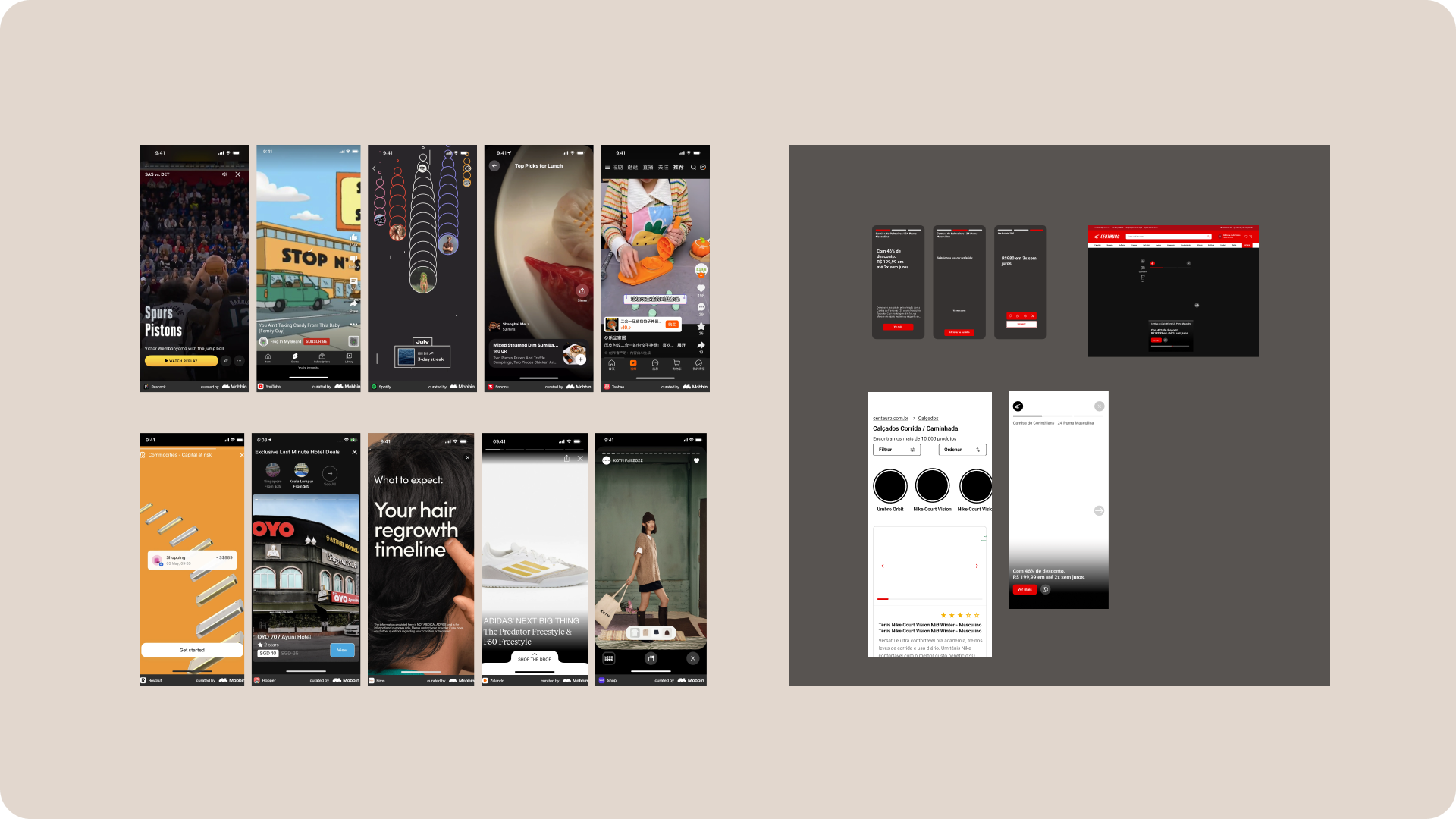
We also benchmarked social commerce platforms, such as Xiaohongshu, to understand how content-driven formats influence product discovery and decision-making.
These insights helped define the opportunity to move from a static catalogue model to a more content-driven experience.
CHALLENGES
Adapting a catalogue experience to a content-driven model
Introducing a new format required rethinking how products are presented within an existing e-commerce structure.
Low attention in browsing journeys
Users spent limited time in listing pages, reducing opportunities for discovery.
Static structure limited engagement
Product grids did not encourage deeper exploration or content consumption.
Mismatch between behaviour and interface
Users expected faster, more visual experiences similar to social platforms.
Balancing engagement and performance
Adding richer content needed to work within existing technical and performance constraints.
DESIGN DECISIONS
Turning product discovery into a content-driven experience
Turning product discovery into a content-driven experience
We explored how to move beyond traditional navigation by introducing a familiar social pattern: stories.
Stories were designed as a complementary layer, creating new entry points for discovery without disrupting the existing browsing flow.
We structured them as editorial containers, allowing content teams to define formats and narratives based on campaign and product needs.
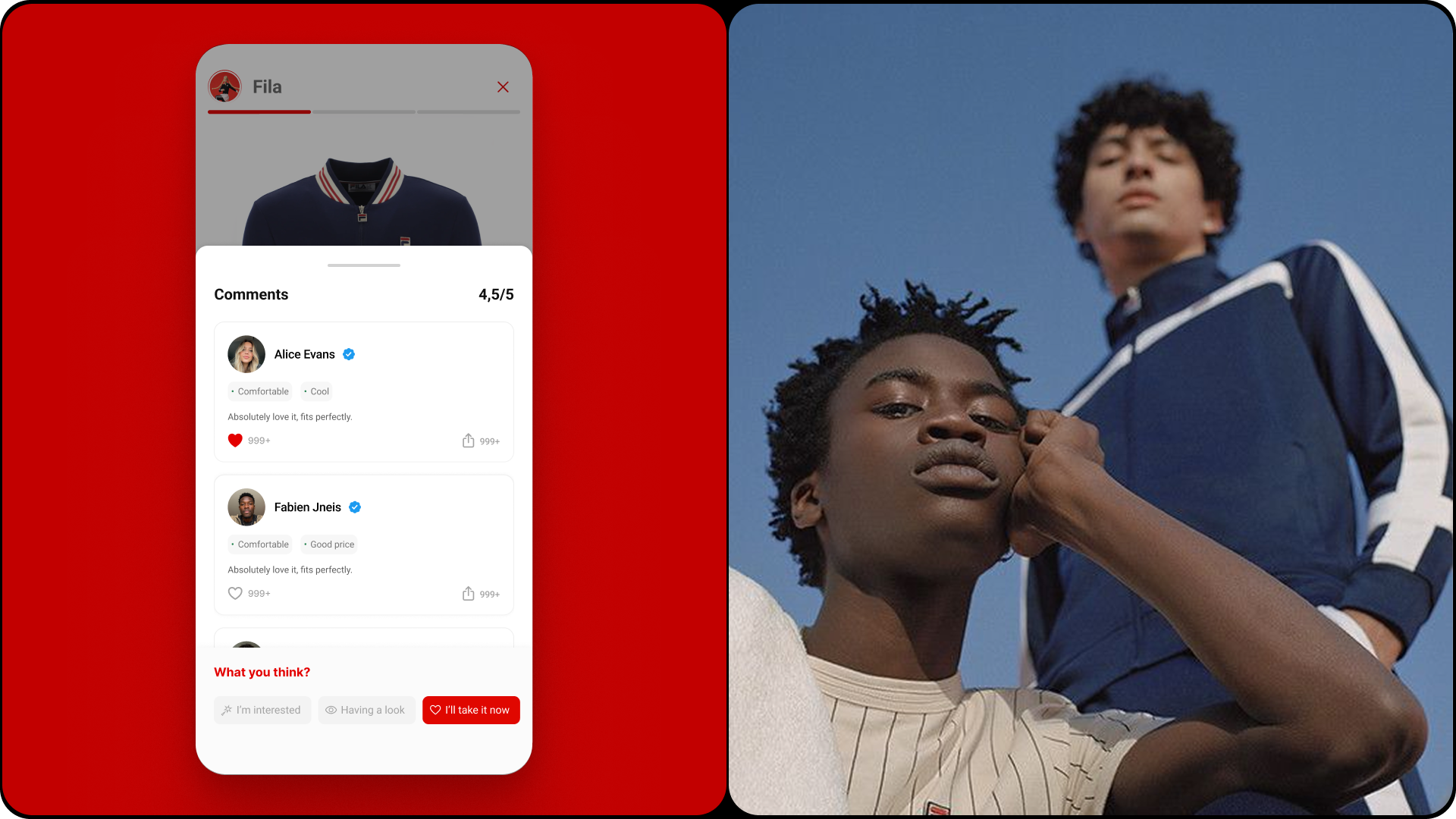
We also leveraged existing product data, such as reviews, to add credibility and support product consideration, while enabling social sharing to extend reach.
This approach transforms discovery into a more immersive experience, where users explore products through content, context and inspiration.
SOLUTION
Introducing web stories as a content-driven layer in product listing pages
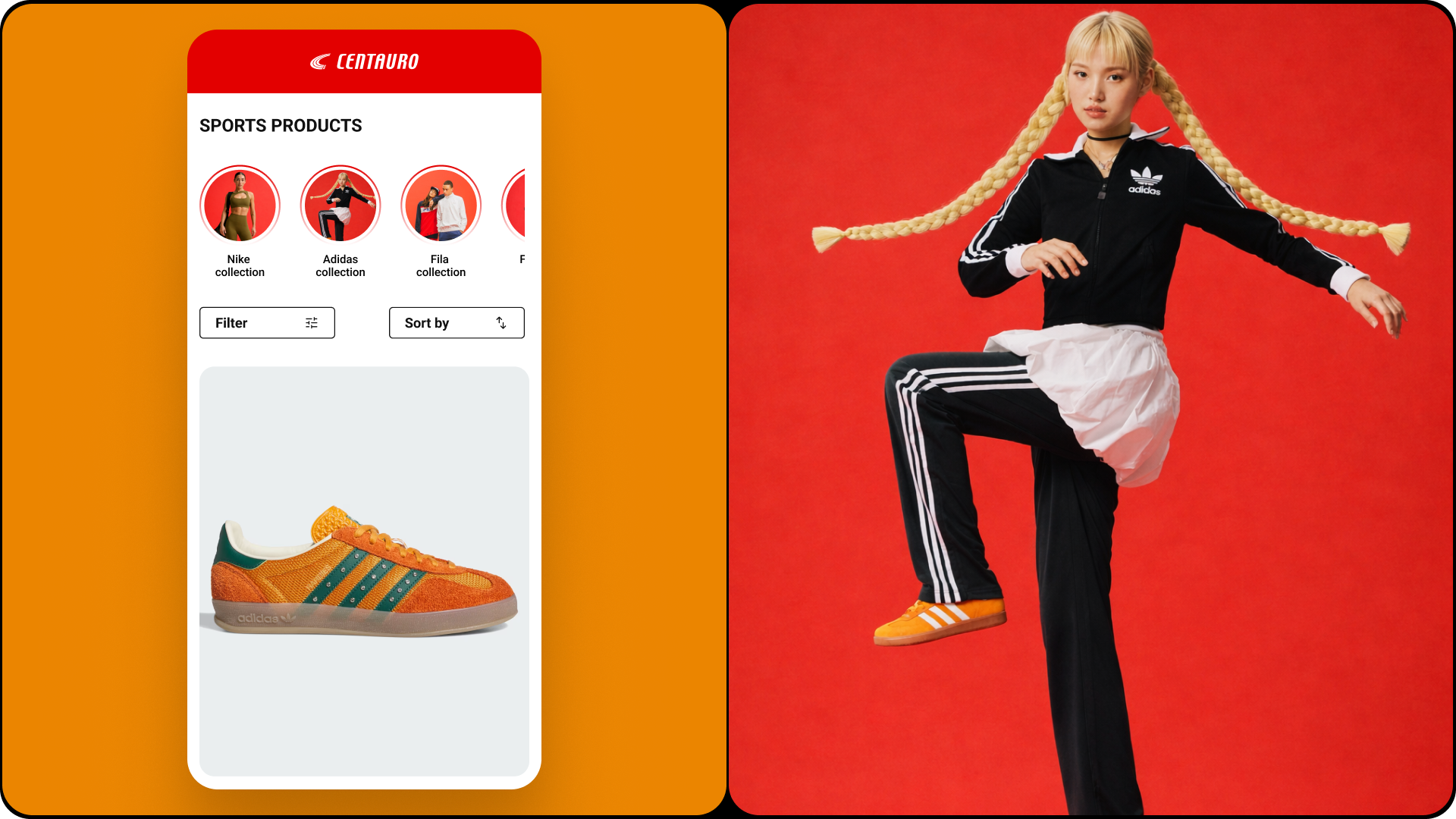
To improve product discovery, we introduced a web stories experience within product listing pages, allowing users to explore products through a more visual and sequential format.
Stories applied to product results
Highlighted products were presented as stories at the top of the listing page.
Sequential product storytelling
Each story was structured across multiple screens, combining media, product information and actions.
Dynamic and editorial content based on product data
Stories used existing product information such as price, description and media to generate content.
Integrated actions within the experience
Users could explore details, view variations and move towards purchase directly from the story.
RESULTS
Testing a new format to increase engagement in discovery journeys
We validated the concept through usability testing with interactive prototypes, focusing on how users explored products within the new format.
Users engaged more with product content and explored multiple items without leaving the listing page.
Higher content engagement
Users spent more time interacting with product information compared to static listings.
More exploratory behaviour
The story format encouraged navigation across multiple products instead of focusing on a single item.
Faster product understanding
Visual and sequential content helped users grasp key information more quickly.
These results indicate strong potential to improve product discovery, time spent in listing pages and conversion rate.
NEXT STEPS
Scaling the format and evolving towards a more content-driven commerce experience
The web stories format creates a foundation to expand content-driven discovery across the platform.
Expansion to other categories
The model can be adapted to different product categories beyond football and apparel.
Integration into the internal platform
The component can be incorporated into Grupo SBF’s internal systems, enabling other brands to adopt the format.
Evolution towards social commerce
Future iterations can explore deeper integration with content, creators and social behaviours.