Preserving important stories through guided conversations
A conceptual voice-based experience designed to make memory keeping feel natural, personal and ongoing.
PRODUCT DESIGNER
CONCEPTUAL
2026
ROLE
TYPE
YEAR
OVERVIEW
Making meaningful stories easier to capture
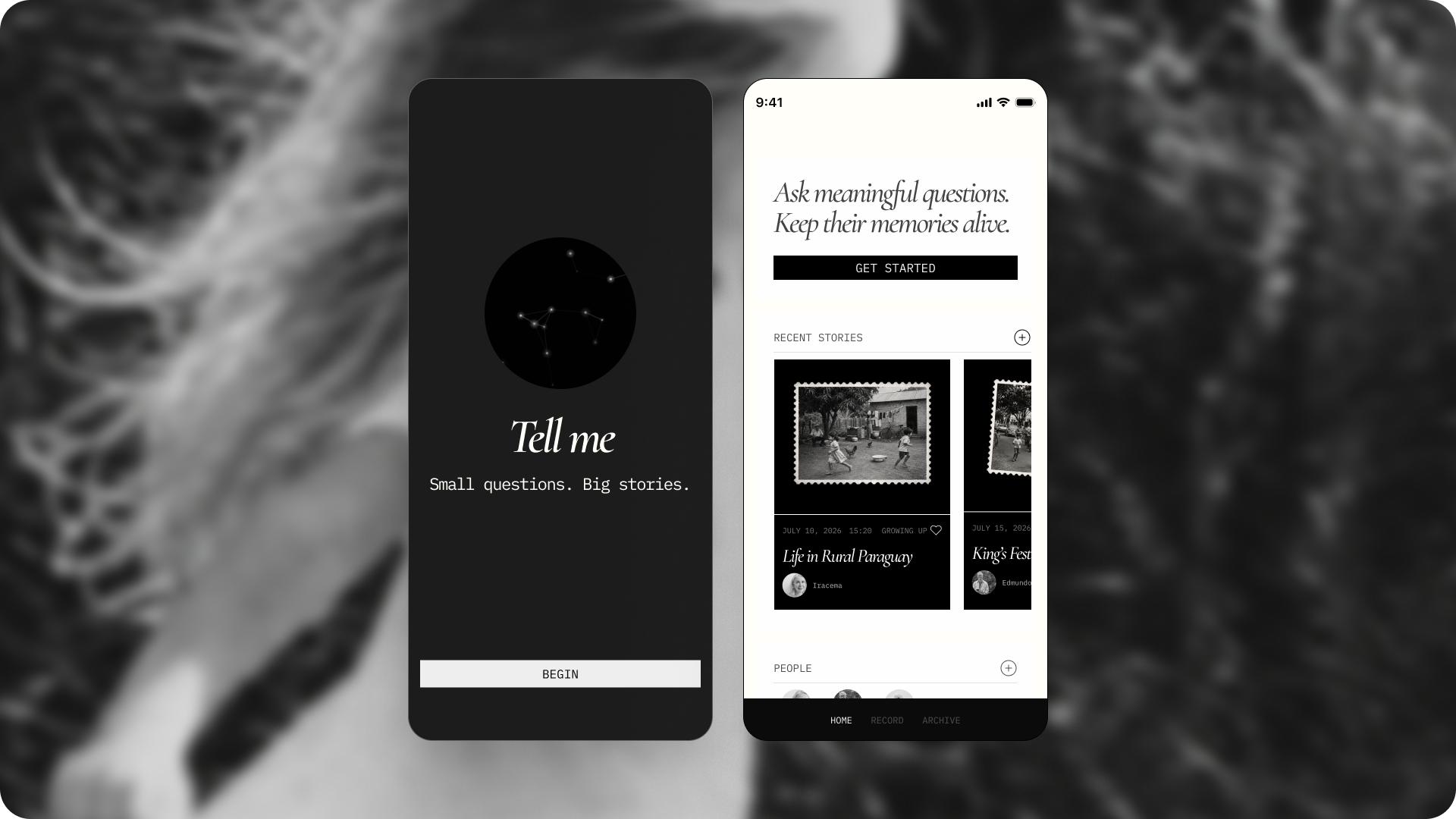
Tell Me is a conceptual product designed to help people start conversations about memories, traditions and life experiences while they still can.
The experience uses one theme-based question at a time and saves each answer as a memory that can be read or listened to later.
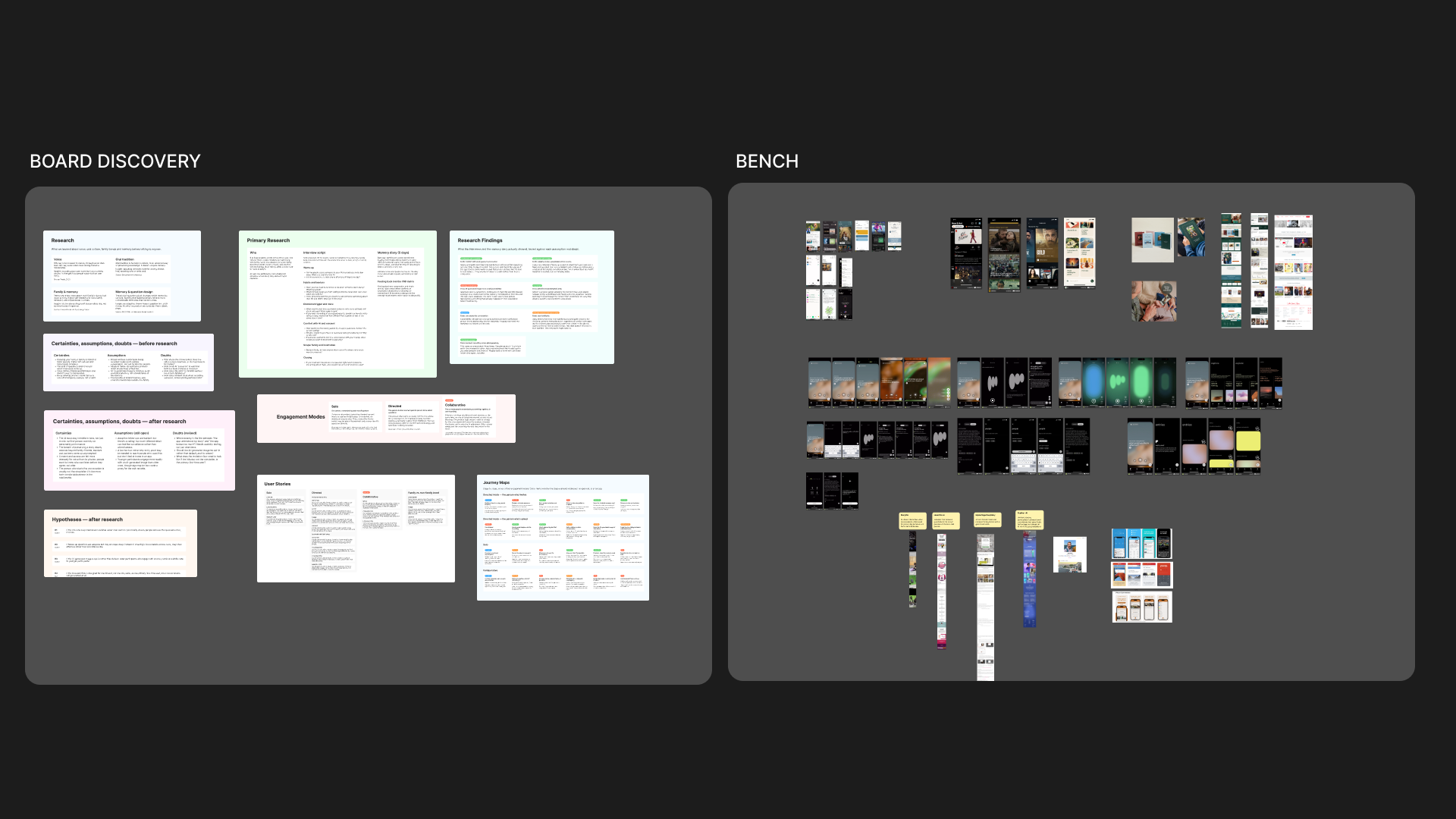
I explored how voice, family storytelling and memory retrieval influence what people remember and share, then tested the core assumptions through interviews and a short memory diary study.
PROBLEM
Important stories often disappear because some conversations never starts
Photos and videos capture moments, but often leave out the stories around them: what happened, why it mattered or how someone remembers it.
Existing memory-keeping products are commonly designed around intentionally documenting someone's life, often as a defined project or a gift for an ageing relative.
People may want to hear these stories and still struggle to start the conversation. Asking can feel formal, intrusive or difficult to bring up naturally.
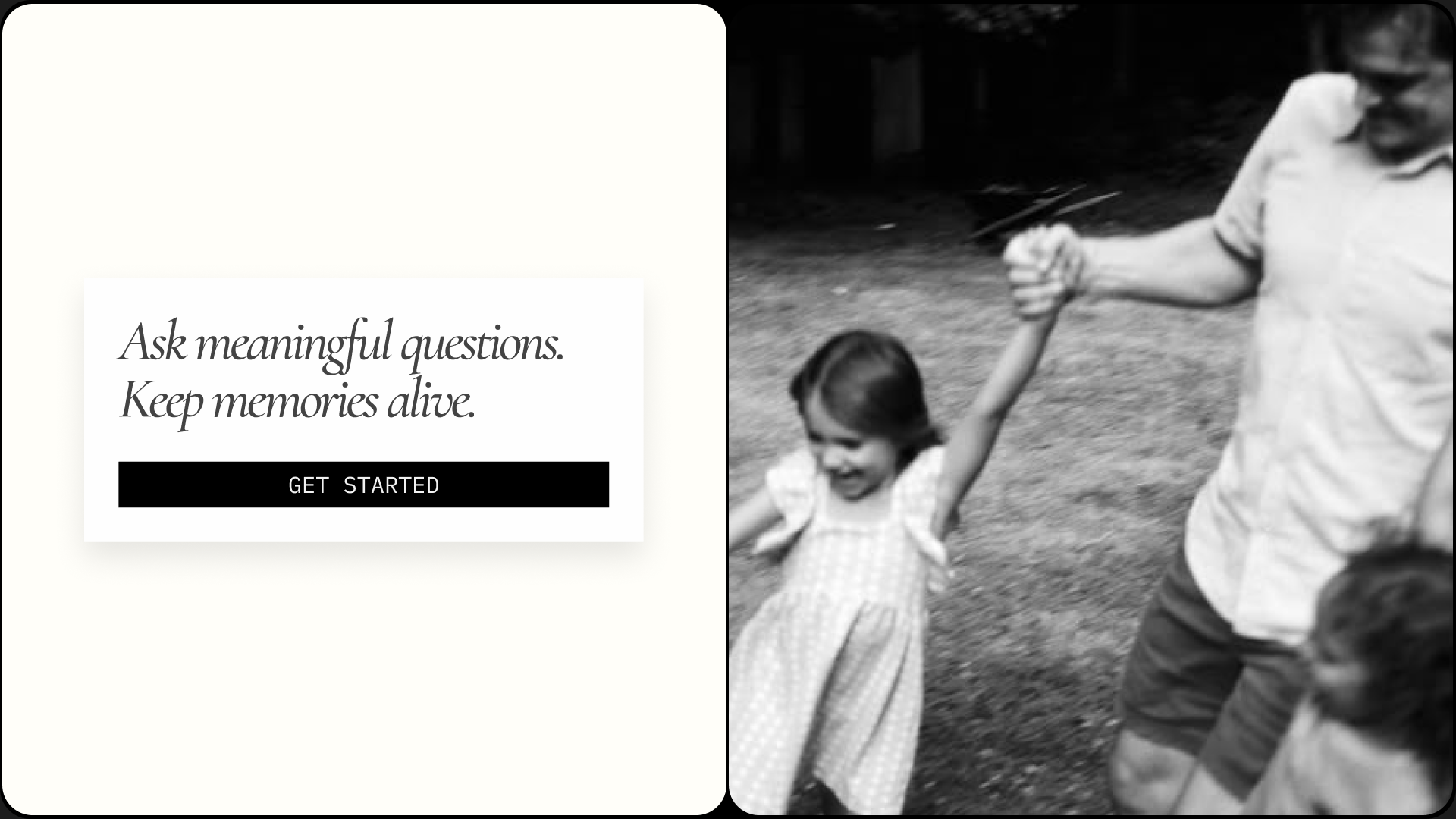
The opportunity was to make meaningful conversations easier to start and easy to return to over time.
APPROACH
Understanding what helps people remember and share
Before designing the experience, I explored voice, oral storytelling, family narratives and autobiographical memory.
Research showed that voice can preserve tone and emotional context, while family storytelling is linked to stronger wellbeing and sense of identity. Memory research also showed that meaningful prompts can influence what people recall.
These findings shaped the core interaction: using a theme to generate a specific question and give people a clear place to start.
I also benchmarked StoryWorth, Remento, Storii, HereAfter AI and StoryCorps. This revealed an opportunity to treat memory keeping as an ongoing conversation, with questions shaped by each interaction.
RESEARCH
Testing what people need to start sharing
I took three assumptions into primary research:
People wanted to have these conversations but struggled to know where to start.
People needed to understand who could hear their answer before sharing openly.
A single, specific question could make starting easier than an open prompt.
I ran semi-structured interviews and a short memory diary study to test them.
Two findings came through clearly:
People struggled to start these conversations without making them feel formal or intrusive. The opening of the conversation itself was a significant barrier.
Participants also wanted to know who would have access to what they shared before answering. Trust and audience needed to be clear at the beginning of the experience.
DESIGN DECISIONS
Turning research findings into a simple conversation flow
The research shaped how the experience starts, how context is maintained and how each memory is recorded and saved.
Choosing who you're speaking with first
The flow begins by asking who you're speaking with today, with the relationship shown alongside each person. This establishes the audience before anything is recorded.
Keeping the conversation context visible
Once a person and theme are selected, both remain visible during the question and recording. The user can always see who the memory is being shared with and what prompted it.
Using one question at a time
The user chooses from a short list of themes and receives one specific question shaped by that theme. This gives each conversation a clear starting point.
Creating a calm recording state
The recording screen uses a slow ambient circle inspired by a night sky. I removed the waveform and prominent timer to reduce the visual emphasis on recording mechanics while someone is speaking.
Keeping the original voice with the memory
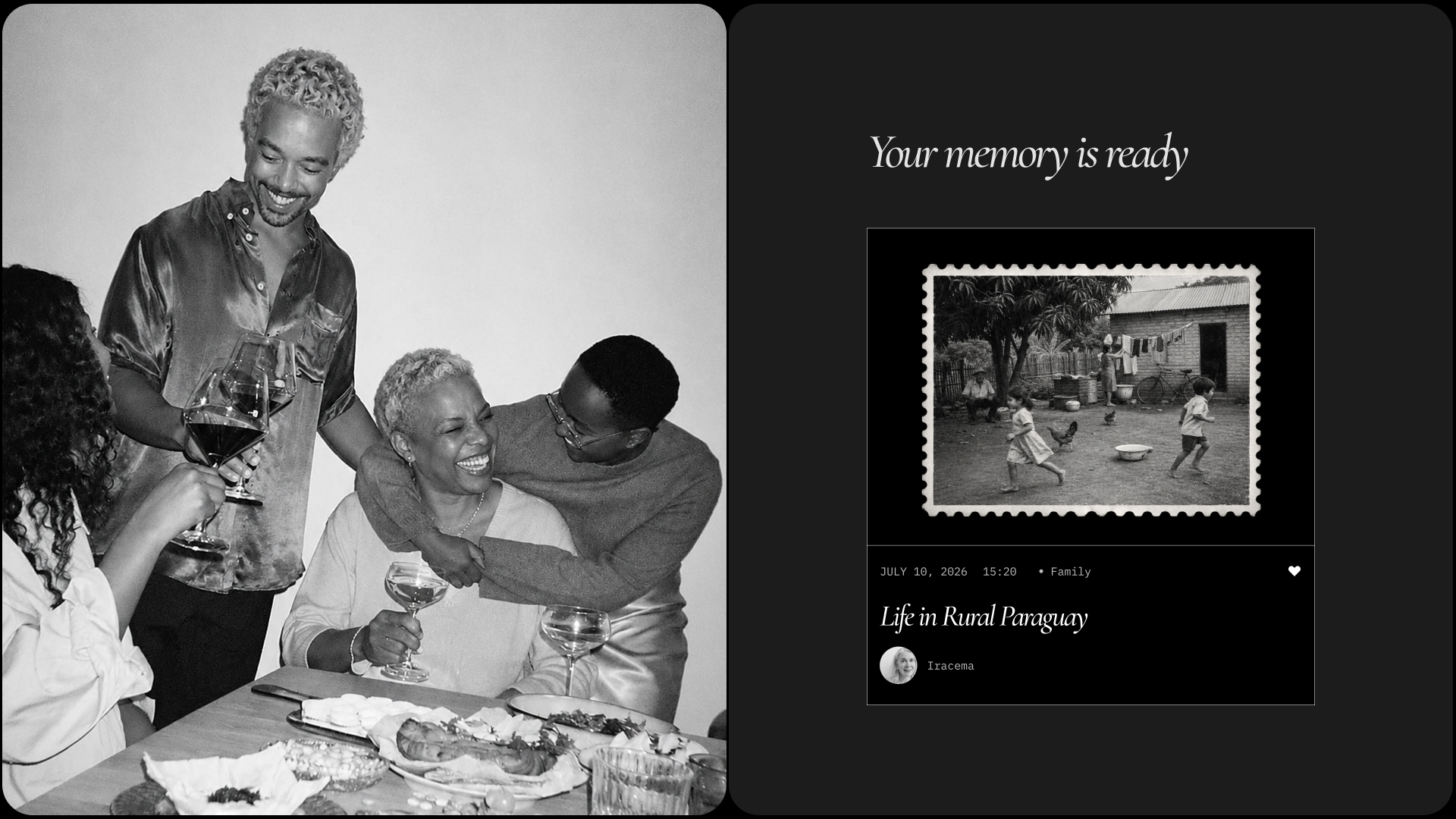
Each saved memory includes the written story and its original audio. Tone and delivery remain accessible alongside the transcript.
SOLUTION
Building a growing archive one conversation at a time
Tell Me uses a simple loop: choose a person, choose a theme, answer one question and save the memory.
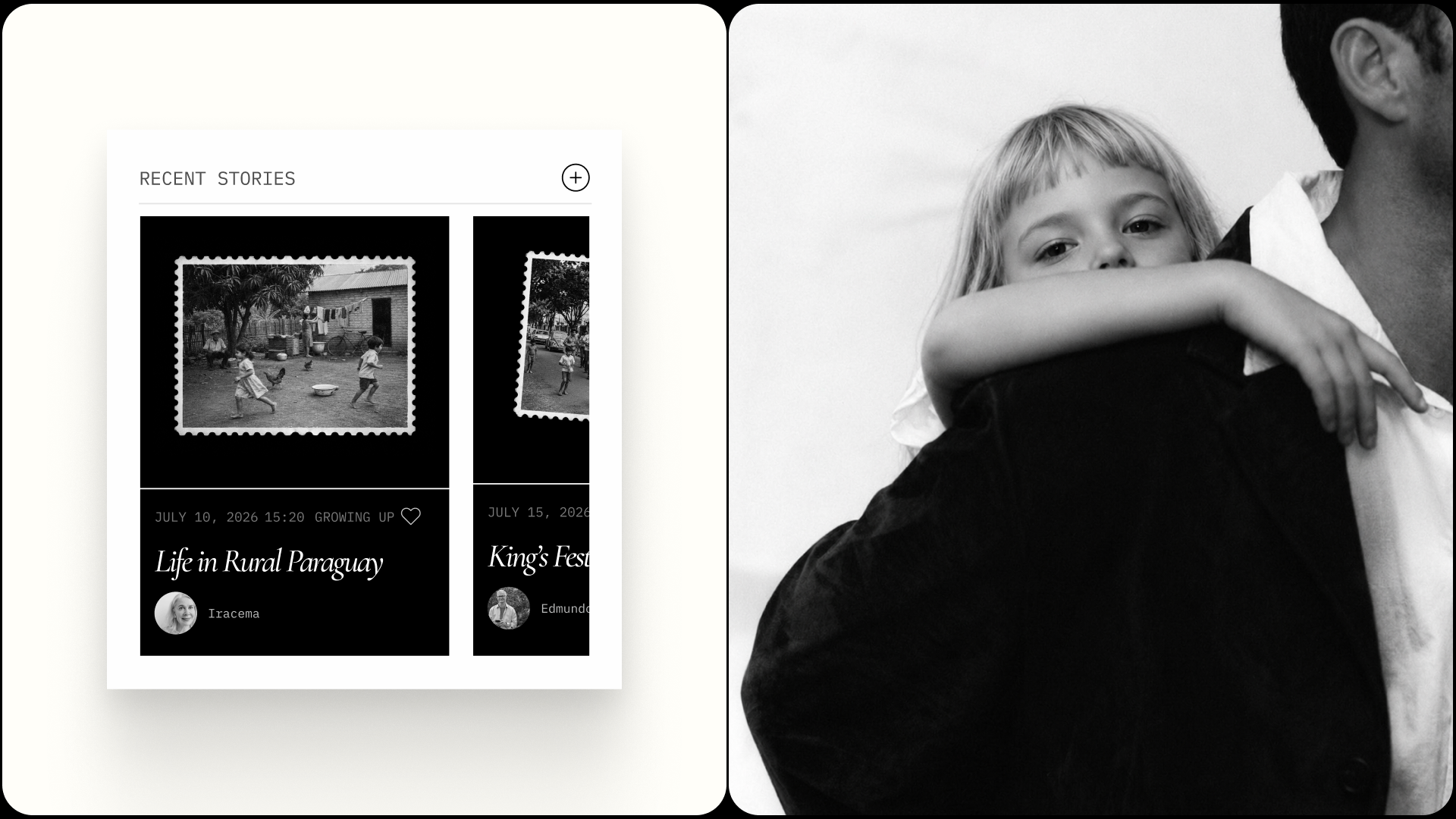
The home screen brings recent stories and the people involved into the main experience, making it easy to revisit existing memories or start another conversation.
Each finished memory can be read, listened to again or shared.
Over time, these individual conversations build a personal archive of stories, voices and relationships.
NEXT STEPS
Exploring solo and collaborative memories
The current flow was designed and tested around one mode: one person answering a question from someone who invited them.
Two additional use cases surfaced during the process: someone recording a memory independently and several people contributing to the same memory. Neither has been tested with participants yet.
Solo recording raises questions around how someone chooses a theme and starts a memory without another person initiating the conversation.
Collaborative recording introduces questions around ownership and structure. A memory with several contributors may require a different model for how questions, answers and voices are organised.
The next step is to test each mode separately and understand how the current experience needs to adapt before bringing them into the product.