Centauro
Content Design, 2023
Designing a Content Design System for Centauro
I designed a Content Design System integrated with Centauro’s Design System to help product teams write consistent interface content. By turning writing decisions into structured rules aligned with UI components, teams gained autonomy and reduced delivery errors.
CONTENT DELIVERY-40%
Structured writing rules reduced late-stage fixes and content inconsistencies across product teams.
TEAM AUTONOMY↑
Product designers and PMs were able to write interface content without relying on constant brand or senior validation.
CONSISTENCY AT SCALE↑
Content patterns and component rules ensured consistent tone, terminology and structure across products and brands.
Problem
When I joined Grupo SBF, product content was created independently by each team.
Designers and product managers wrote interface content based on their own interpretation of the brand. This resulted in different tones, structures and terminology across products and flows.
Brand guidelines existed but were not practical for product interfaces, microcopy or system messages.
As a result, content reviews often happened late in the process. Teams depended heavily on brand or senior validation, and last-minute changes frequently caused delivery errors and rework. Designers spent significant time questioning wording decisions instead of focusing on product design.
Approach
I started by analysing how teams wrote and validated content in product work.
Through interviews and workshops with Product Design, Branding, Product Management and Customer Experience teams, I mapped how writing decisions were made and where uncertainty appeared.
In parallel, I analysed customer perception research. One insight was consistent: customers valued the friendly and simple way store sellers explained sports products in physical stores.
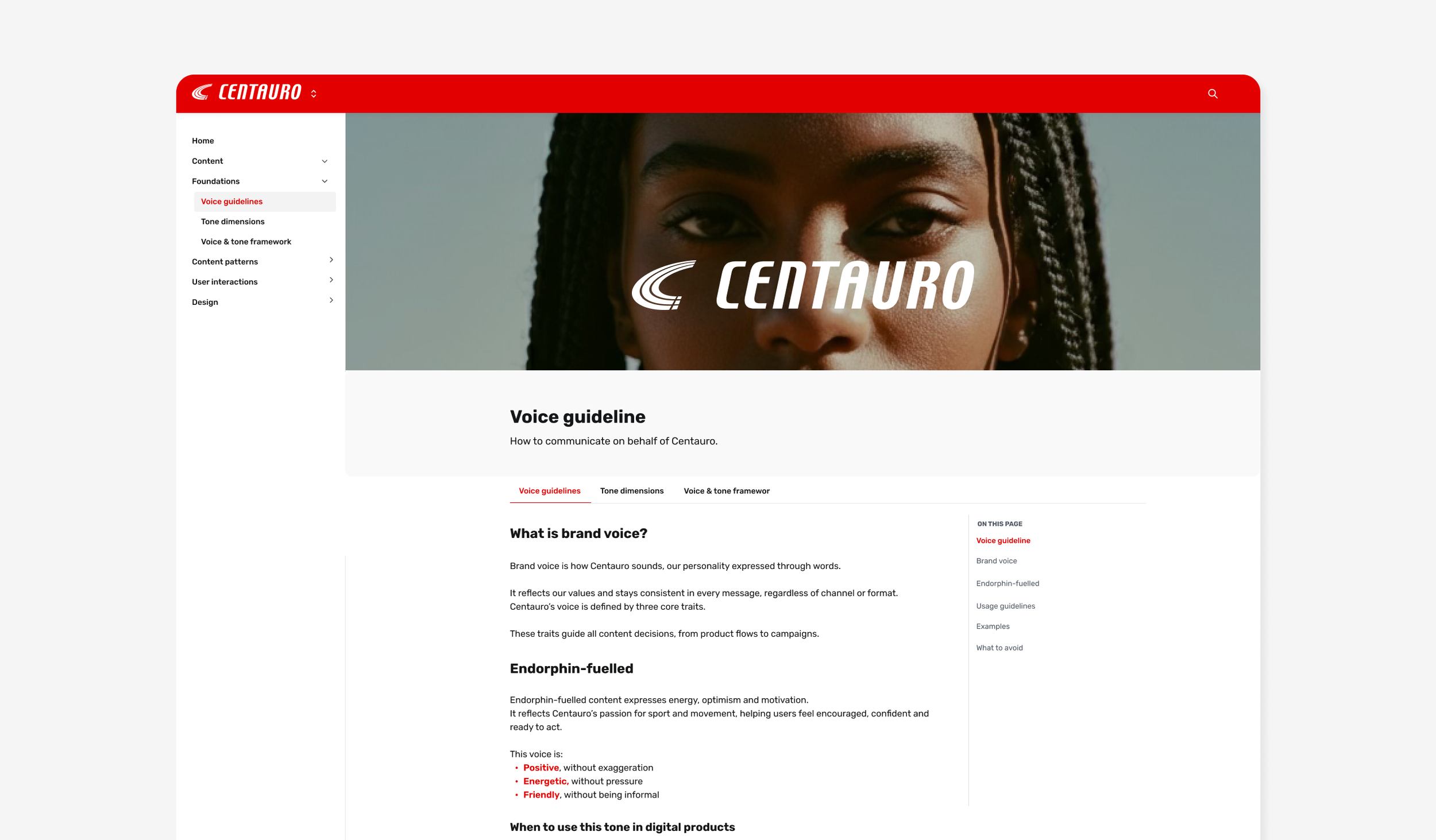
This behaviour became the reference for the brand voice in digital products: friendly, simple, clear and helpful.
The research revealed four key issues: brand guidelines were not usable in daily product work, teams lacked autonomy in writing decisions, content varied across products, and confidence in writing decisions was low.
Solution
Instead of creating another guideline, I designed a Content Design System integrated with the Design System.
First, I analysed the Design System as a content container, mapping components, text slots and structural constraints. This ensured content standards could fit naturally into the interface.
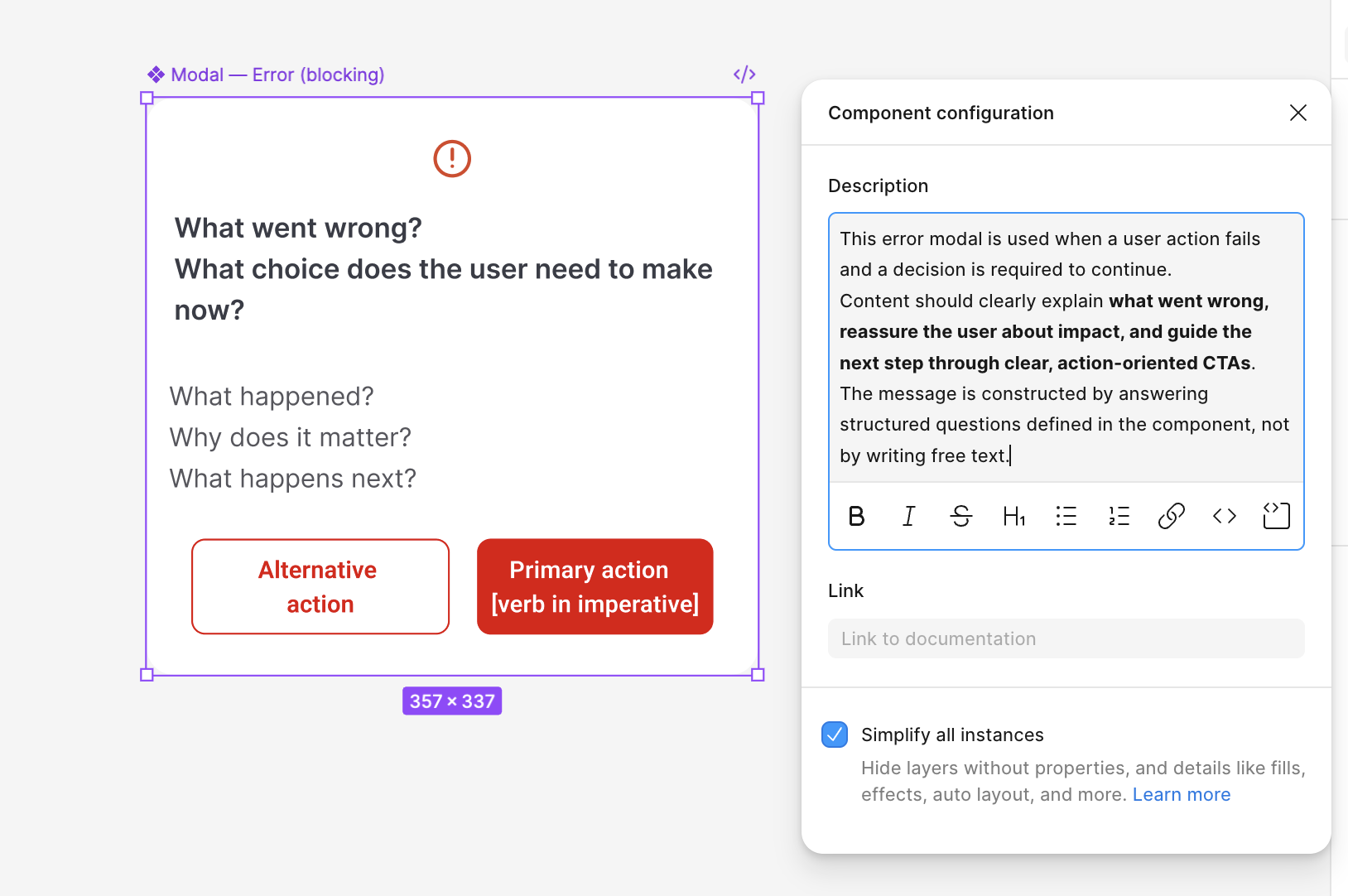
For each component, I defined content contracts describing what content belonged in each text slot, its purpose and tone boundaries. I also created reusable content patterns for common scenarios such as error messages, empty states, confirmations and system feedback. Each pattern defined information order, intent and tone guidance.
Finally, I formalised key linguistic decisions including pronoun usage, verb tense, preferred CTA verbs and naming conventions aligned with components. These elements transformed writing decisions into shared and reusable rules embedded in the product interface.
Outcomes & Learning
Embedding content standards into the design system reduced delivery errors by 40%.
Product teams produced content faster with fewer revisions, reducing rework between Product, Branding and CX teams.
Content also became more consistent across products and brands, and designers relied less on approvals and more on shared rules.
This project reinforced an important lesson: content scales when writing decisions become structured systems shared across teams.